Have you ever wondered: Solar power is generated during the day, but what happens when electricity is needed at night? Or when a factory requires a large amount of electricity at the same time, is there a way to make better use of the energy available?
One solution to these challenges is a battery energy storage system, commonly known as BESS. As you explore this technology, you will come across a distinctive sight: large containers specifically designed to house energy storage equipment.
These are known as Container BESS.
1. If Electricity Were Like Water, What Would BESS Be?
Imagine that your home has a water storage tank.
When water is plentiful, you can store it for use when the supply becomes limited or demand increases. This means your water consumption does not have to depend entirely on when the water supply is available.
The same principle can be applied to electricity.
Solar power systems typically generate more electricity during hours of strong sunlight. However, the electricity demand of a factory, building, or industrial park does not always coincide with the time when power is generated.
Sometimes, more electricity is generated than is needed immediately. At other times, demand increases in the evening, when solar panels are no longer generating electricity.
So, is there a way to store that electricity and use it at a later time?
This is where battery energy storage systems come into play. Think of BESS as a water storage tank, except that instead of holding water, it stores electrical energy for later use.
This system is called Battery Energy Storage System - BESS
Understanding BESS Through an Example
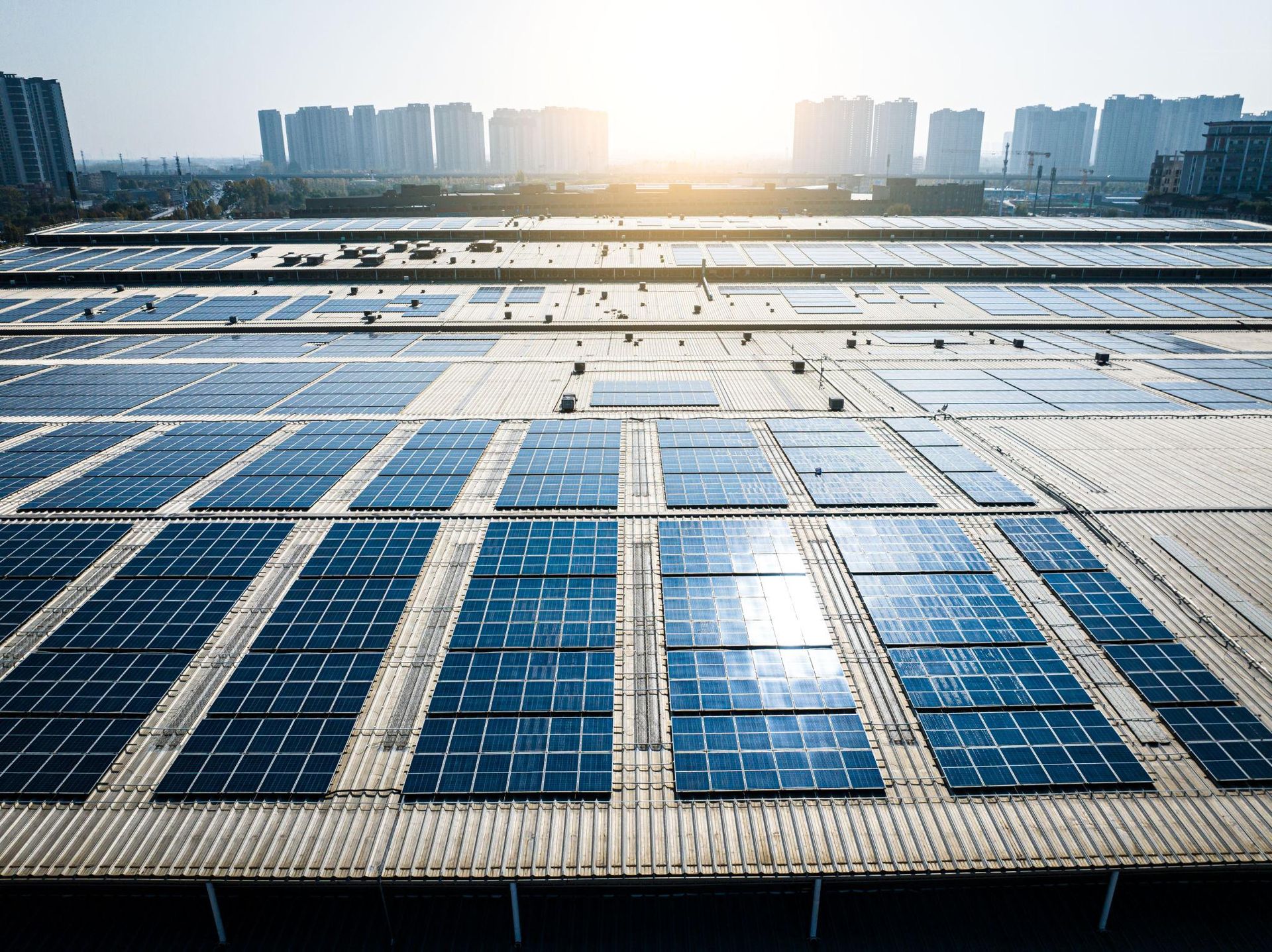
Step 1. Generating Electricity: Solar panels convert sunlight into electrical energy.
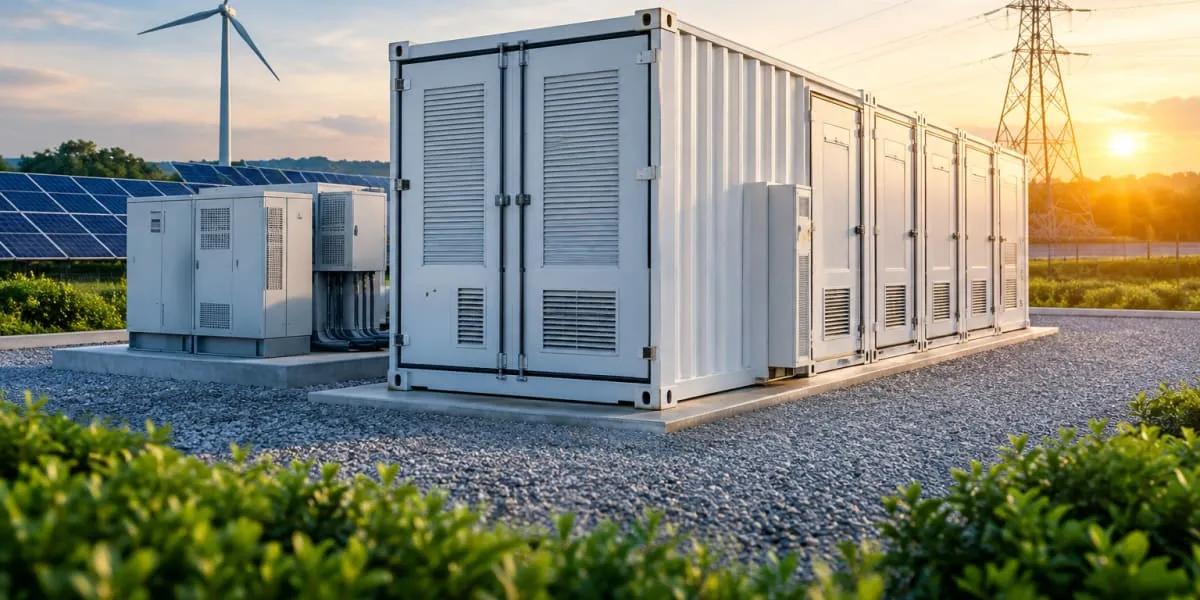
Step 2. Storing Electricity: The battery system stores the electricity that is available for charging.
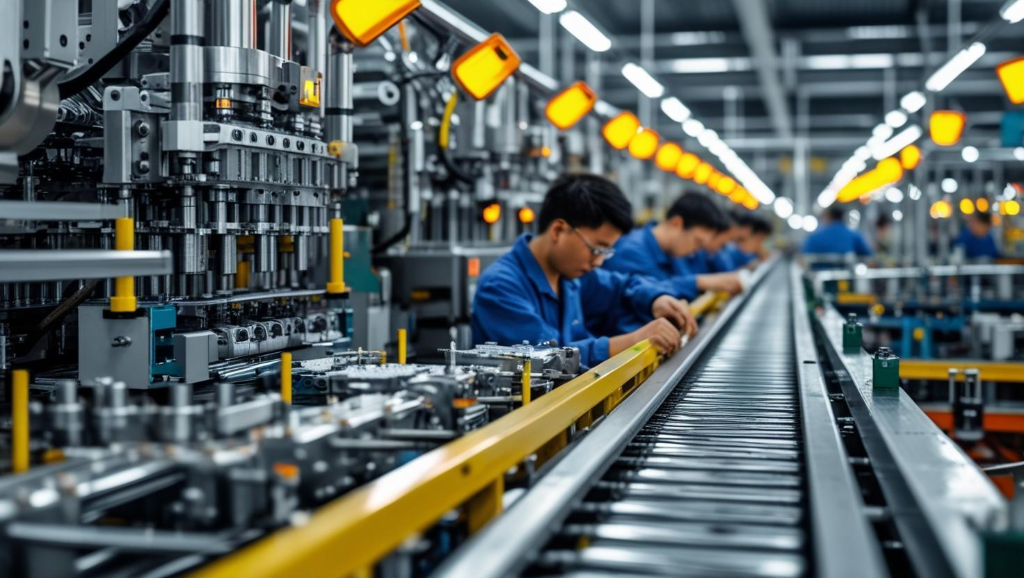
Step 3. Using Electricity: When needed, the system discharges stored energy to support factory operations or other applications for which it has been designed.
BESS does not generate electricity on its own. It receives electricity from a suitable source, stores the energy, and supplies it when needed. In addition to being paired with solar power systems, BESS can also be designed to charge from the electrical grid or other suitable power sources.
Learn more about Battery energy storage systems (BESS) and how this technology works.
2. Why Is Energy Storage Equipment Housed in a Container?
When people hear the word “container,” they often think of large metal boxes used to transport goods by ship, truck, or train.
However, containers are not limited to transporting cargo. When specifically designed and manufactured to meet technical requirements, they can also serve as enclosures for specialized equipment and systems.
In a Container BESS, the container is used to house the equipment of an energy storage system rather than conventional cargo.
Inside, there may be large battery assemblies, electrical equipment, control systems, cooling equipment, and the safety systems required by the design. Depending on the configuration, these components are arranged to work together during energy storage and discharge.

Illustration of a Container BESS
You can think of a Container BESS as a compact technical room built into a single enclosure, making it easier to arrange equipment, transport the unit, and install it at the intended location.
The key difference is that this is not an ordinary container that simply needs enough space to hold items. It must be designed to accommodate the equipment installed inside and meet the specific requirements of the overall system.
Learn more: How Is a Container BESS Different from a Standard Shipping Container?
3. What Makes a BESS Container Enclosure Special?
Imagine that you are building a house.
You can purchase all the furniture, electrical equipment, and other items you need. But before using them, you still need a suitable structure to accommodate and protect everything inside.
The container enclosure plays a similar role in a BESS.
However, a BESS container enclosure is more than just a steel box. It is a specialized structure designed to meet the requirements of a particular system and project.
- First, it must accommodate the equipment inside. Dimensions, structural design, door locations, openings, and connection points must be determined according to the design. The available space must support equipment installation, cable routing, operation, and maintenance.
- Second, it must meet protection requirements. Containers may be installed outdoors, where they are exposed to rain, sunlight, dust, and other environmental conditions. Materials, structural features, doors, and protective measures must therefore be selected to suit the intended operating environment.
- Third, it must work in conjunction with the system's safety measures. Battery storage equipment must operate under appropriate conditions. Cooling, ventilation, fault detection, and fire protection requirements must be considered as part of the overall system design. The container enclosure itself cannot replace all these safety systems.
- Fourth, it must facilitate transportation and installation. A system may be manufactured at a factory, transported to the project site, and installed for operation. The structure must therefore be compatible with the planned lifting, transportation, and installation methods.
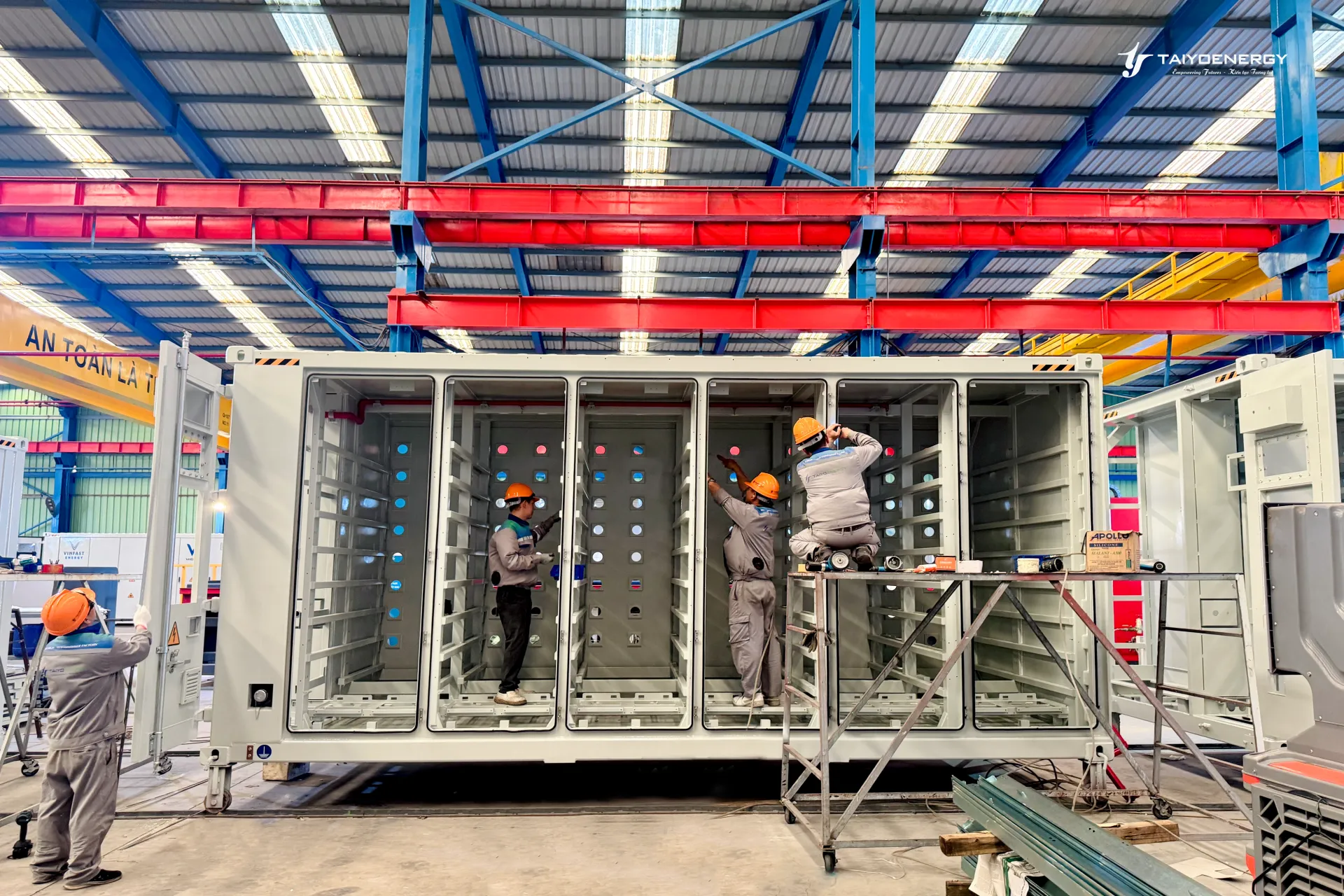
BESS Container Enclosure Manufactured at TaiyoEnergy's Factory
These requirements show that enclosure quality is not determined solely by the quality of the steel or the appearance of the finished product. What matters is whether the enclosure meets the design specifications and is suitable for the equipment and actual operating conditions.
Learn more about the structure of a Container BESS system to better understand its components and structural requirements.
4. Where Does TaiyoEnergy Fit into This Value Chain?
TaiyoEnergy contributes to the development of the energy sector through its manufacturing capabilities in BESS container enclosures and specialized electrical cabinet enclosures. These structures are manufactured to meet the requirements of modern energy systems.
Our focus is on manufacturing specialized enclosures rather than producing every component of a complete energy storage system.
Starting with steel sheets and technical drawings, the manufacturing process involves fabrication, forming, welding, surface finishing, and quality inspection to produce enclosures that meet agreed specifications.
Behind every finished container enclosure are multiple requirements that must be carefully controlled, including structural accuracy, weld quality, surface finish, equipment mounting locations, and conformity with technical drawings. For TaiyoEnergy, the value lies not only in manufacturing a steel product but also in turning customers' technical requirements into a physical structure built to the agreed specifications.
Explore more of TaiyoEnergy's Container BESS projects.